

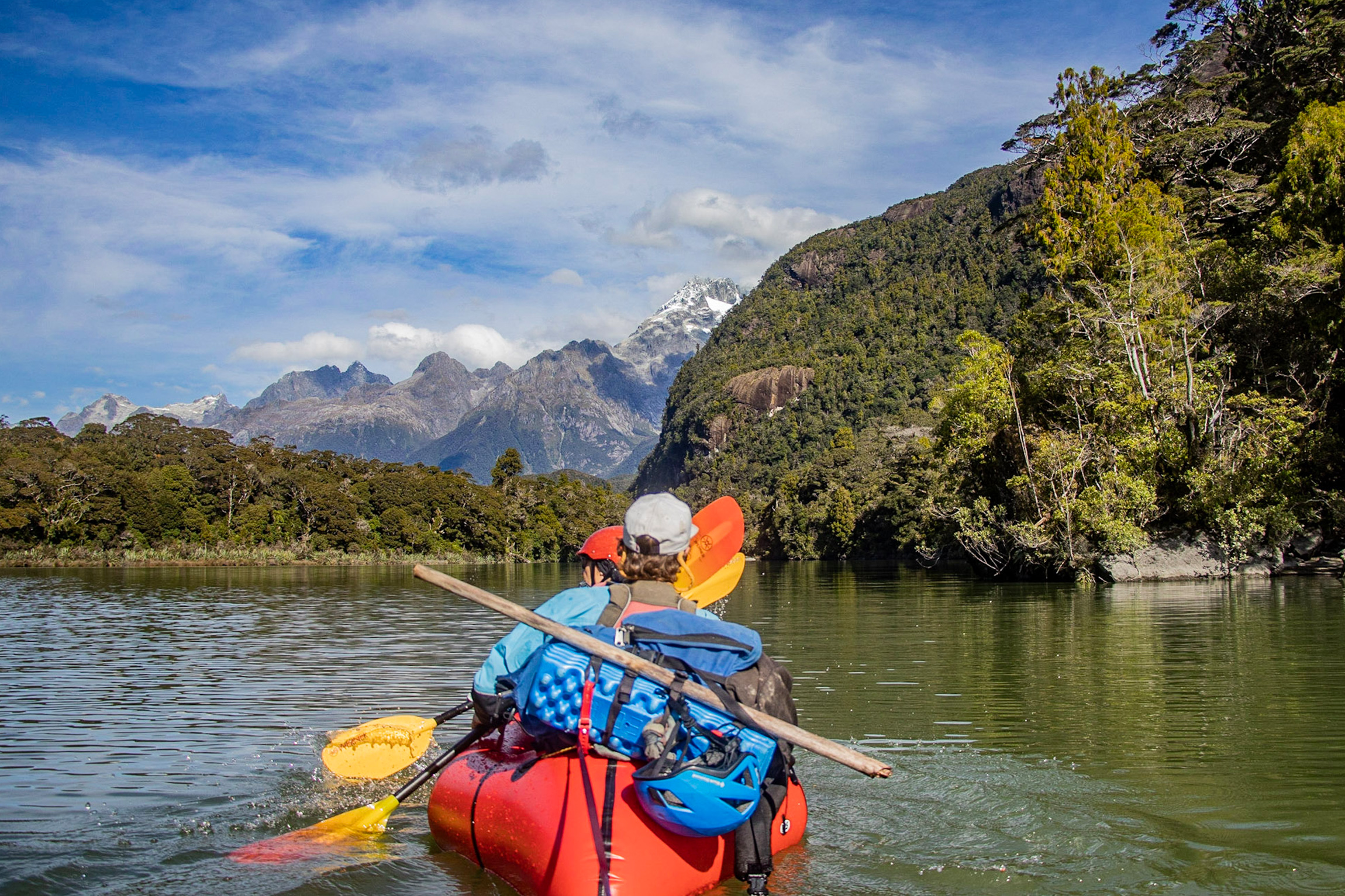
Packrafting changes the way a river valley reveals itself. A narrow trail might lead through forest and rock for hours, yet the moment a lightweight raft touches the water, the entire landscape opens in a different direction. Water becomes a pathway rather than a barrier, and stretches of wilderness that once required days of bushwhacking suddenly feel connected. The rhythm of walking, inflating a raft, and drifting downstream creates an adventure that feels both raw and deeply personal.
Mountain valleys often hide their most dramatic features along the water. Steep canyon walls, braided glacial rivers, and quiet gravel bars exist far from the nearest road. A packraft makes it possible to experience all of it without hauling heavy expedition gear or committing to complicated logistics. The entire craft fits inside a backpack, ready to transform a hiking route into a flowing journey.
Traveling this way blurs the line between backpacking and paddling. Boots crunch over alpine passes in the morning, and by afternoon the same traveler glides through cold currents beneath towering cliffs. That shift between terrain keeps every hour interesting. The river becomes the thread tying the entire landscape together.
The Strange Freedom Of Carrying A Boat In A Backpack
Few moments feel as surreal as pulling a full-sized boat from a backpack miles away from any boat launch. A packraft weighs only a few pounds, yet once inflated it becomes a sturdy craft capable of crossing lakes and navigating fast rivers. That transformation alone creates a sense of possibility that traditional backpacking rarely offers.
Carrying the raft feels surprisingly natural on the trail. The packed boat sits beside sleeping gear, food, and clothing like any other piece of equipment. The difference lies in the options it unlocks. A lake that once forced a long detour becomes a direct crossing, and a river valley transforms into a natural highway through wild terrain.
That freedom changes how routes are imagined. Instead of sticking to established trails, the map begins to look like a network of water corridors and mountain passes. A path might climb into the hills, drop toward a river, then continue downstream for miles before climbing again. The journey becomes fluid, shaped by the landscape rather than limited by it.
Moving Between Trail And River
Packrafting rarely involves staying on the water all day. The most rewarding routes shift between hiking and paddling depending on the terrain. Sometimes a trail leads to the headwaters of a river, where the raft finally meets the current and the valley begins to unfold in long bends and sweeping gravel bars.
Transitioning from trail to river becomes a small ritual. The raft spreads across the ground while the pump bag fills it with air. Dry bags are secured, the paddle snaps together, and suddenly a backpacking trip becomes a river expedition. That shift in perspective changes the pace of the day, replacing footfalls with the sound of moving water.
Later, the process reverses itself. The raft deflates, folds neatly into its bag, and disappears back into the pack. Boots return to the trail while the river continues winding through the valley below. Alternating between those modes keeps the journey dynamic and prevents the fatigue that sometimes settles into long, repetitive days.
Reading The Character Of A Mountain River
Every river carries a personality shaped by the terrain around it. In mountain valleys the current rarely behaves gently for long. A calm stretch might glide through meadow grass before tightening into rocky rapids that demand attention and precise paddling.
Studying the water becomes second nature after a while. Subtle patterns reveal hidden rocks, strong currents, and safe channels. A tongue of smooth water often signals the cleanest path through a rapid, while chaotic waves hint at obstacles lurking just below the surface. Reading those signs makes the difference between drifting gracefully downstream and bouncing through unpredictable water.
Packrafts respond quickly to movement, which helps in tight spaces. A few deliberate paddle strokes can steer the boat away from rocks or guide it into a calmer channel. The responsiveness of the craft creates a feeling of connection with the river, almost like the paddler and the current are having a quiet conversation.
Essential Gear For River Valley Travel
Packrafting demands careful attention to gear without becoming overly complicated. The raft itself forms the heart of the setup, but several pieces of equipment work together to keep the journey safe and efficient. A lightweight paddle, a compact inflation bag, and reliable dry bags protect essential supplies.
Safety gear plays a critical role in mountain rivers. A personal flotation device adds buoyancy during unexpected swims, and a helmet becomes valuable when navigating rocky rapids. Cold water is common in alpine environments, so insulating layers and sometimes a dry suit protect against hypothermia during long days on the river.
Backpacking equipment still matters just as much. A durable tent, warm sleeping bag, and efficient cooking system allow travelers to camp along gravel bars and forested riverbanks. The beauty of packrafting lies in how seamlessly those worlds blend together. River gear and mountain gear share space in the same pack.
Navigating Remote And Untouched Landscapes
River valleys often carve through regions that see very little human traffic. Trails fade away, cell signals disappear, and the sound of rushing water replaces the noise of civilization. Traveling through these places requires a mindset built on awareness and self-reliance.
Maps and navigation tools become constant companions. A bend in the river might conceal a canyon, a waterfall, or an impassable rapid. Careful planning ensures that dangerous sections are portaged safely on foot rather than attempted on the water.
Remoteness also brings a deeper sense of immersion in the natural world. Wildlife appears along the riverbanks, from curious birds circling overhead to deer stepping cautiously through the brush. Moments like that remind me how rarely people pass through these valleys.
Camp Life Along Gravel Bars
Evenings in a river valley carry a quiet atmosphere that feels different from camps in dense forest. Gravel bars provide wide open views of the surrounding mountains, and the constant murmur of the river fills the background. After a long day of hiking and paddling, setting up camp becomes part of the rhythm of the journey.
A flat stretch of gravel offers a perfect spot for a tent. The raft rests nearby, drying in the cool air while gear spreads out across the rocks. Cooking dinner beside the river feels simple and satisfying, especially when the entire day unfolded through wild terrain far from any road.
Night arrives slowly in these valleys. The sky darkens behind jagged ridgelines while the river continues its endless movement through the canyon. Sitting beside the water after sunset often becomes the quiet highlight of the day.
Weather, Water Levels, And River Mood
Mountain weather rarely follows predictable patterns. Clear skies in the morning can shift to sudden rainstorms by afternoon, and those changes influence the river’s behavior. Rising water levels can transform calm stretches into powerful currents within hours.
Watching the river closely helps reveal those changes early. The color of the water, the speed of the current, and the sound of rapids all provide clues about what lies ahead. Experience gradually builds an instinct for when conditions feel manageable and when caution becomes the wiser choice.
Respect for the river shapes every decision during a packrafting trip. Walking around a dangerous rapid may add time to the journey, yet that extra effort often protects both equipment and safety. The goal is not to conquer the river but to travel alongside it with awareness.
Why Packrafting Feels Different From Any Other Adventure
Packrafting holds a unique place among outdoor activities because it blends movement through land and water so naturally. Backpacking alone explores mountains slowly, while kayaking focuses entirely on rivers. Packrafting sits between those worlds, allowing travelers to weave through both landscapes during the same journey.
That versatility creates adventures that feel unpredictable in the best possible way. A morning hike might lead to a hidden lake perfect for paddling, or a quiet river bend might reveal a canyon that demands careful navigation. Each section of the route feels like a new chapter.
There is also a playful element to carrying a boat across mountain terrain. Inflating it beside a remote river feels slightly rebellious, as if discovering a secret passage through the wilderness. That sense of discovery keeps the experience fresh even after many trips.
A Day That Flows From Ridge To River
A typical day during a packrafting trip often begins high above the valley floor. The morning might start with a climb over a mountain pass, where the first glimpse of the river appears far below. From that vantage point the water looks calm and distant, winding through forests and open meadows.
Descending toward the valley gradually brings the river closer. The sound of rushing water grows louder with every step until the trail finally reaches the bank. At that moment the pack opens, the raft inflates, and the landscape shifts from vertical mountain travel to horizontal movement along the water.
The afternoon unfolds with steady paddling through bends and small rapids. Gravel bars appear as natural rest stops, while tall cliffs rise above the river corridor. By the time evening arrives, miles of terrain have passed quietly beneath the raft.
Lessons Carried Home From The River
Packrafting leaves lasting impressions long after the trip ends. Moving through remote valleys builds patience and awareness that are difficult to learn elsewhere. Rivers demand respect, mountains reward preparation, and both environments remind travelers how small they are within the landscape.
Each journey also builds confidence in unexpected ways. Navigating rapids, carrying gear across rugged terrain, and camping beside wild rivers all strengthen the ability to adapt to changing conditions. That confidence extends beyond the river valley and into everyday life.
Memories from these trips often return in small flashes. The sound of water echoing through a canyon, the moment a raft glides into a calm pool after a rapid, or the quiet glow of sunset over a mountain riverbank. Those images linger long after the gear has been packed away.
The River Always Leads Somewhere New
Every river valley carries a sense of direction. The water flows steadily downhill, pulling the traveler deeper into the landscape with every bend. Packrafting follows that natural path, turning the river itself into a guide through wilderness that might otherwise remain unseen.
Maps may outline the route, yet the real journey unfolds through experience. Rapids appear unexpectedly, wildlife crosses the shoreline, and weather reshapes the mood of the valley hour by hour. Those elements create an adventure that cannot be fully predicted.
Sliding a packraft into a river always carries a quiet thrill. The current begins to move, the paddle dips into cold water, and the valley opens ahead. From that moment on, the river decides the pace of the journey while the traveler simply follows its course.
