

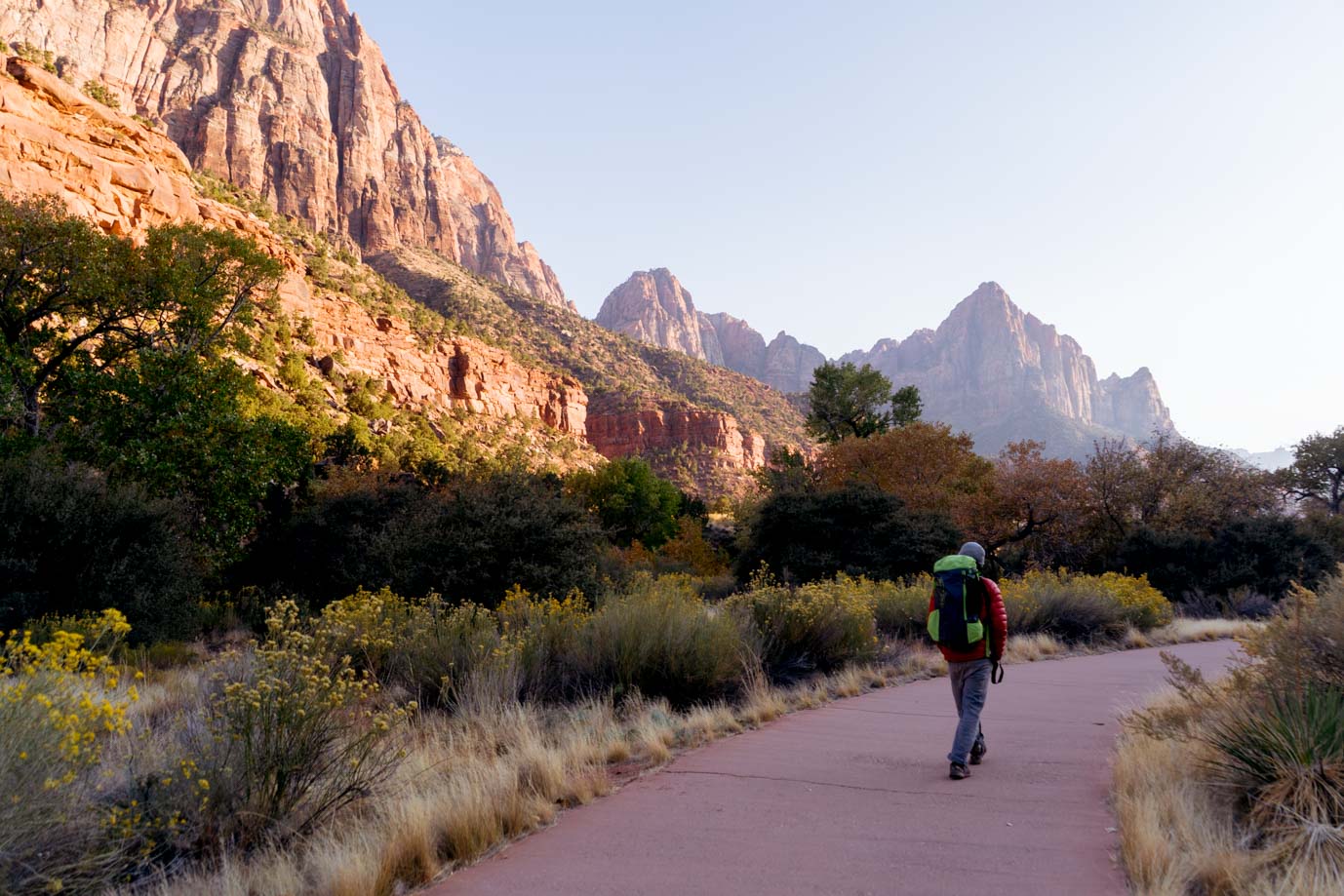
The American Southwest carries a reputation for harsh heat, endless sand, and landscapes that feel empty at first glance. That image never truly captured what I experienced on the trail. Walking through desert terrain reveals a world that feels alive with color, texture, and quiet drama that shifts with every mile.
Desert hiking reshaped the way I see landscapes that many people overlook. The trails wind through towering sandstone walls, cactus forests, hidden springs, and wide open valleys where the horizon feels limitless. Each step reveals how the desert rewards patience and attention.
Five trails stand out as the ones that completely altered my perspective. They revealed the Southwest not as a barren place, but as one of the most visually powerful and emotionally grounding hiking regions in North America.
Angels Landing Trail, Utah
Few desert hikes deliver intensity and beauty quite like Angels Landing in Zion National Park. The trail begins with a steady climb through towering canyon walls that glow red and orange under the desert sun. Early in the morning the light filters into the canyon in a way that makes the rock seem almost alive.
The climb up Walter’s Wiggles introduces the first real challenge. The tight switchbacks stack on top of one another and force a steady pace, but each turn reveals a wider view of Zion Canyon below. The desert vegetation clings stubbornly to cracks in the rock, reminding me that life thrives even in places that appear unforgiving.
The final stretch along the narrow ridge demands focus and calm nerves. Chains bolted into the rock guide hikers along exposed ledges where the canyon drops away dramatically on both sides. Standing on the summit brings a feeling that words struggle to capture. The vast canyon stretches in every direction, and the desert landscape suddenly feels immense rather than empty.
Angels Landing changed the way I looked at desert terrain. The combination of height, exposure, and glowing sandstone revealed a landscape full of drama and scale that photographs rarely capture.
The Wave Trail, Arizona
The hike to The Wave in the Coyote Buttes area feels like stepping into a surreal painting. The trail begins across open desert terrain where navigation depends more on reading the land than following clear trail markers. Walking through the sandy washes and sandstone hills builds anticipation with every step.
Approaching The Wave reveals a landscape sculpted by wind and time. The swirling bands of red, orange, and cream-colored sandstone curve across the rock like frozen ocean waves. The patterns feel almost too perfect to be natural, yet the desert created them over millions of years.
Exploring the surrounding formations reveals countless hidden shapes and colors. Some ridges resemble rolling dunes carved in stone, while others twist into strange spirals that catch the sunlight in unexpected ways. The quiet in this part of the desert deepens the experience, making every movement and footstep feel significant.
Standing within The Wave shifts perspective in a profound way. The desert suddenly feels less like a harsh wilderness and more like a massive outdoor gallery shaped by geological forces far beyond human imagination.
Lost Mine Trail, Texas
The Chisos Mountains rise dramatically from the desert floor in Big Bend National Park. The Lost Mine Trail climbs steadily into these mountains, offering one of the most rewarding views in the Southwest. The hike begins beneath juniper and oak trees, which feel surprisingly lush compared to the surrounding desert.
As the trail climbs higher, the landscape slowly expands into a breathtaking panorama. Layers of desert ridges stretch toward the horizon, broken by deep canyons and rocky peaks. The contrast between the green mountain slopes and the surrounding desert valleys creates a sense of depth that feels endless.
Wildlife occasionally appears along the trail, adding an element of surprise. Mule deer wander quietly through the trees, and birds circle overhead riding the warm desert air currents. The stillness of the mountains amplifies every sound, from rustling leaves to distant winds moving across the canyon walls.
Reaching the final overlook delivers a view that completely redefines the desert landscape. The vast Chihuahuan Desert spreads outward in layers of shadow and light, proving that desert terrain can hold as much visual richness as any alpine mountain range.
Cathedral Wash Trail, Arizona
Cathedral Wash begins as a simple sandy wash near Lees Ferry, yet the landscape quickly transforms into a narrow canyon adventure. The towering canyon walls rise higher with each turn, slowly blocking out the wider desert sky above.
The route requires scrambling over rocks, navigating tight passages, and occasionally dropping down small ledges. Each bend in the canyon reveals new shapes carved by flash floods and centuries of erosion. Smooth sandstone walls twist and fold together in ways that feel almost architectural.
Light becomes one of the most fascinating elements of the hike. As the sun moves across the canyon, beams of light reflect off the rock walls and illuminate the narrow passage in shifting patterns. The canyon changes character throughout the day, revealing colors that range from deep crimson to pale gold.
The trail eventually opens near the Colorado River, where the canyon walls suddenly part to reveal sweeping views of the surrounding desert cliffs. The dramatic transition from tight canyon corridors to a vast river landscape leaves a lasting impression of how dynamic desert environments can be.
Camelback Mountain Echo Canyon Trail, Arizona
Camelback Mountain rises sharply above the city of Phoenix, forming one of the most recognizable desert peaks in the Southwest. The Echo Canyon Trail climbs directly up the mountain’s steep slopes, creating a hike that feels both physically demanding and visually rewarding.
The trail begins with rocky steps that gradually grow steeper as the route climbs higher. Sections of handrails and metal cables assist hikers through exposed rock faces that require careful footing. The rugged terrain forces a slower pace, but the views grow wider with every section of elevation gained.
Desert plants thrive along the trail in ways that often surprise visitors. Towering saguaro cacti stand like silent guardians along the slopes, while smaller cacti and desert shrubs fill the rocky gaps between boulders. The contrast between the harsh terrain and the vibrant plant life demonstrates the resilience of desert ecosystems.
Reaching the summit reveals a sweeping view of the Phoenix Valley stretching across the horizon. Mountains rise in the distance, while the desert city below looks almost miniature from the peak. The hike transforms Camelback Mountain from a city landmark into a powerful reminder of the desert landscape surrounding urban life.
A Landscape That Feels Alive
Spending time on these trails gradually reshaped the way I interpret desert environments. The Southwest holds a remarkable diversity of terrain that shifts dramatically from one trail to the next. Towering cliffs, winding canyons, colorful sandstone formations, and mountain ridges create a landscape that feels constantly alive with movement and change.
Temperature swings, shifting light, and seasonal rains all influence the desert’s personality. Morning hikes often reveal soft golden light across the rock formations, while sunset transforms entire canyon walls into glowing towers of color. These subtle changes bring a sense of rhythm to desert hiking that feels deeply connected to the natural world.
The quietness of the desert also plays a powerful role in the experience. Without the dense forests or constant wildlife sounds of other regions, every moment feels more focused. The crunch of gravel beneath boots, the whisper of wind through cactus spines, and the distant echo of ravens create an atmosphere that feels almost meditative.
The Desert’s Lasting Impact
Each of these trails challenged the stereotypes many people hold about desert landscapes. Instead of endless emptiness, the Southwest revealed itself as a place of intricate beauty shaped by wind, water, and time. The terrain demands respect, patience, and awareness, yet it rewards those qualities with unforgettable experiences.
Long after leaving the trail, memories of these landscapes continue to surface unexpectedly. The colors of sandstone cliffs, the vastness of desert horizons, and the silence of narrow canyons linger in ways that few other environments manage to achieve.
The desert rarely reveals everything at once. Its beauty unfolds gradually through miles of trail, careful observation, and moments of stillness. Walking these paths completely transformed the way I see the Southwest, turning what once seemed like empty land into one of the most captivating hiking regions on the continent.
