

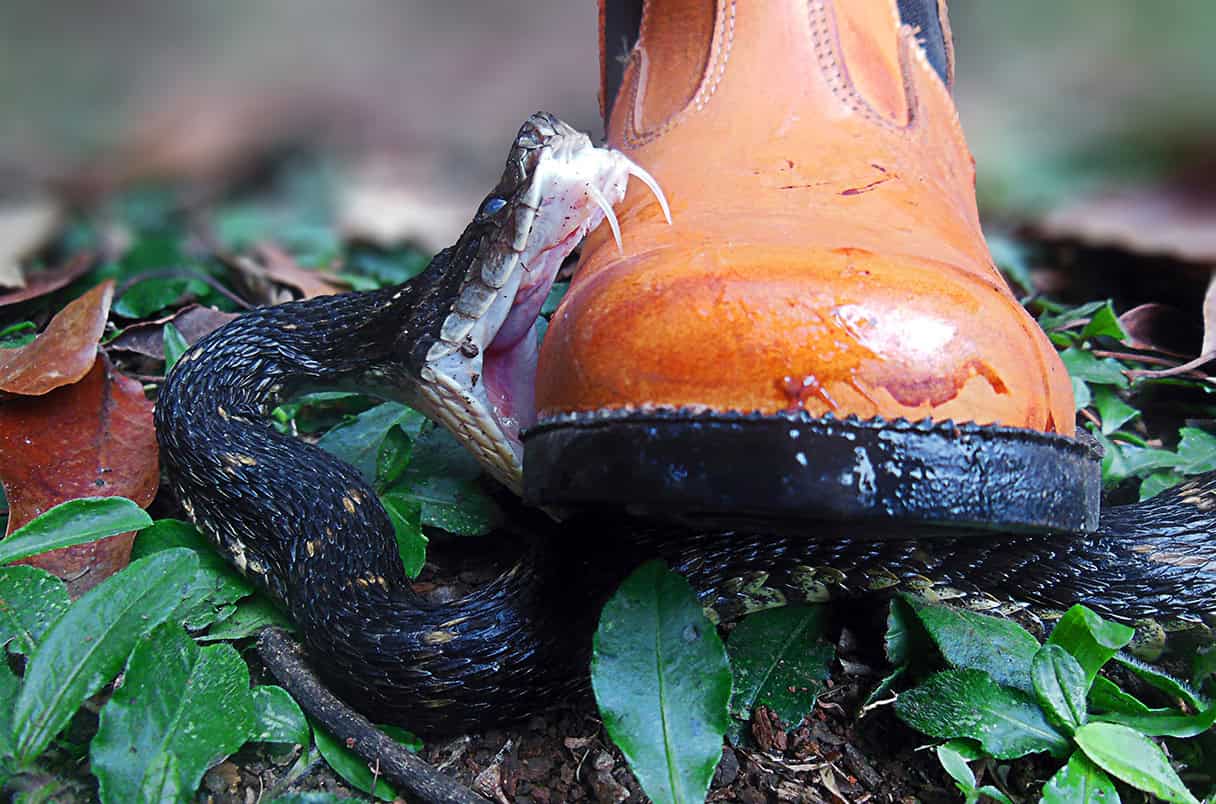
A narrow trail cutting through tall grass or rocky desert can hide more than just scenic views. Venomous snakes live across many landscapes in North America, from forests and mountains to deserts and wetlands. Anyone who spends time hiking or exploring outdoors eventually shares the same environment with these reptiles. Knowing what lives along the trail is not about fear; it is about respect, awareness, and preparation.
Encounters with venomous snakes are rare, and most snakes avoid people whenever possible. Still, hikers, campers, and climbers occasionally cross paths with them, especially during warm seasons when snakes are most active. I have walked enough trails to know that paying attention to where I step and what surrounds the path can make the difference between a peaceful hike and a dangerous situation.
North America is home to several venomous species, each with its own habits, habitat, and appearance. Some blend into rocky slopes, while others prefer swampy wetlands or desert sand. Recognizing these snakes and knowing how to react helps keep both hikers and wildlife safe.
The Four Major Venomous Snake Groups in North America
Four primary groups of venomous snakes live in North America: rattlesnakes, copperheads, cottonmouths, and coral snakes. Each belongs to a different category within the reptile world, and their behavior varies depending on environment and climate.
Rattlesnakes are the most widespread venomous snakes across the continent. They belong to the pit viper family and are famous for the rattling sound produced by segments on their tails. That warning signal often gives hikers a chance to stop and step away before getting too close.
Copperheads and cottonmouths are also pit vipers and share several physical features with rattlesnakes, such as triangular heads and heat-sensing pits between the eyes and nostrils. Coral snakes differ from these three groups because they belong to the elapid family, the same family as cobras. Their venom is potent, but encounters are extremely rare.
Knowing the general differences between these groups helps hikers quickly recognize potential danger. Even a basic level of familiarity can prevent accidental contact along the trail.
Rattlesnakes of the Mountains and Deserts
Rattlesnakes appear in a wide variety of landscapes, especially rocky mountains, desert basins, and dry grasslands. Species such as the western diamondback, timber rattlesnake, and prairie rattlesnake often inhabit hiking areas throughout the United States and parts of Canada and Mexico.
Their camouflage is remarkable. Brown, gray, and tan patterns blend perfectly with gravel trails, dry leaves, and sunlit stones. I have walked past a coiled rattlesnake before realizing it was resting beside the trail, its markings nearly identical to the surrounding rocks.
Most rattlesnakes prefer to avoid confrontation. If disturbed, they may coil, raise their heads, and shake their rattles as a warning. That sound is a signal to stop moving forward and slowly step away without sudden motion.
During hot weather, rattlesnakes sometimes seek shade along trails or beneath rocks where hikers also stop to rest. Keeping a careful eye on the ground and surrounding rocks reduces the chance of accidentally stepping too close.
Copperheads in Forests and Hillsides
Copperheads are among the most common venomous snakes in the eastern United States. Forest trails, wooded hillsides, and leaf-covered ground provide the perfect camouflage for their distinctive hourglass-shaped patterns.
Their coloration blends almost perfectly with fallen leaves. Many hikers unknowingly walk within a few feet of a copperhead without noticing it at all. That natural camouflage explains why accidental encounters happen more often with this species than with others.
Copperheads rely on stillness as their primary defense. Instead of immediately fleeing, they often remain motionless and hope predators pass by without noticing them. A careful look at the trail ahead helps reveal subtle shapes or patterns that might otherwise blend into the forest floor.
Despite their reputation, copperheads are not aggressive animals. Most bites occur when someone accidentally steps on or reaches toward a hidden snake.
Cottonmouths of Wetlands and Swamps
Cottonmouths, also known as water moccasins, prefer wet environments such as swamps, marshes, slow-moving rivers, and lake edges. These snakes are most common in the southeastern United States, where humid climates support dense wetland habitats.
Their name comes from the defensive display they show when threatened. A cottonmouth may open its mouth wide, revealing a bright white interior that serves as a warning to predators. This dramatic display is usually meant to discourage approach rather than start a fight.
Cottonmouths are strong swimmers and often move easily through shallow water. Hikers crossing streams or exploring muddy shorelines sometimes encounter them resting near logs or rocks along the water’s edge.
Many harmless water snakes resemble cottonmouths, which leads to frequent misidentification. The safest approach is to give any unfamiliar snake plenty of space and avoid trying to identify it too closely.
Coral Snakes in the Southern Regions
Coral snakes are visually striking, with bands of red, yellow, and black circling their slender bodies. These snakes live mainly in the southeastern United States and parts of the Southwest.
Unlike pit vipers, coral snakes have small heads and smooth scales. Their venom affects the nervous system rather than tissue, making it different from the venom of rattlesnakes or copperheads. Even so, bites remain extremely rare because coral snakes are secretive and spend much of their time hidden underground or beneath debris.
A common rhyme helps distinguish coral snakes from nonvenomous lookalikes: red on yellow, kill a fellow; red on black, friend of Jack. While the rhyme can help in certain regions, it should never replace caution around any unfamiliar snake.
Most coral snake encounters happen when someone lifts rocks, logs, or piles of leaves where the snake has been resting.
Snake Behavior on the Trail
Venomous snakes are not hunting hikers. Their diet consists mainly of rodents, small birds, frogs, and lizards. Humans are simply much larger animals that accidentally wander into their territory.
Most snakes rely on camouflage and stillness to avoid detection. If they sense vibrations from footsteps, they often slip away quietly before anyone notices. Rattlesnakes may give a warning sound, but many species remain silent.
Warm temperatures increase snake activity. Spring and early summer often bring more encounters because snakes emerge from winter shelter and begin searching for food or mates. Late afternoon and evening can also bring movement as temperatures cool.
Paying attention to surroundings, especially in rocky areas or tall grass, significantly lowers the chance of surprise encounters.
Simple Safety Habits That Reduce Risk
A few practical habits can make hiking in snake territory far safer. Wearing sturdy boots and long pants adds a layer of protection against accidental contact with low vegetation or hidden ground cover.
Watching where each step lands is another important habit. Placing feet on top of rocks or logs rather than stepping directly over them prevents surprising a snake resting on the other side.
Hands should never reach into areas that cannot be clearly seen. Crevices, hollow logs, and thick brush provide hiding places for many reptiles. Using trekking poles or a stick to gently move vegetation can help reveal hidden animals before stepping forward.
Remaining calm during an encounter is essential. Sudden movements may startle a snake and increase the chance of defensive behavior.
What to Do If You Encounter a Venomous Snake
Seeing a venomous snake on the trail can feel startling at first, but the safest response is surprisingly simple. Stop moving and assess the distance between you and the snake. Most snakes remain still unless they feel threatened.
Slowly stepping backward creates space without provoking the animal. Giving the snake room allows it to move away naturally if it chooses. Trying to approach for photographs or closer inspection increases risk and should be avoided.
Many snakes remain motionless even after a hiker backs away. In those cases, walking around the area with a wide detour usually resolves the situation.
Respecting the snake’s space protects both the hiker and the animal. Snakes play an important role in ecosystems by controlling rodent populations.
Snakebite Awareness and First Aid
Snakebites are extremely rare compared to the number of people who hike in North America each year. Still, knowing the basics of first aid can help if an accident occurs.
The most important step is to remain calm and seek medical attention as quickly as possible. Panic raises heart rate and spreads venom faster through the body. Keeping the affected limb still and positioned at heart level helps slow circulation.
Old myths about snakebite treatment often cause more harm than good. Cutting the wound, sucking out venom, or applying tight tourniquets can worsen the injury. Modern treatment relies on professional medical care and antivenom when necessary.
Emergency responders and hospitals in regions with venomous snakes are well equipped to handle bites. Quick transport to medical care remains the safest response.
Respecting Wildlife in the Backcountry
Venomous snakes are part of the natural balance of North American ecosystems. They control rodent populations and serve as prey for larger animals such as hawks and owls.
Many snakes face habitat loss and human persecution. Fear often leads people to kill snakes unnecessarily, even when the animal poses no immediate threat. A more respectful approach keeps both wildlife and hikers safer.
Seeing a snake in the wild can actually become a memorable moment on the trail. Watching one quietly slip through grass or disappear beneath rocks reminds me that wilderness still belongs to the animals that live there.
Preparation, awareness, and respect go a long way in snake country. Trails across mountains, deserts, and forests will always overlap with the homes of these reptiles. Knowing what might be waiting along the path simply helps hikers travel through that world more safely.
