

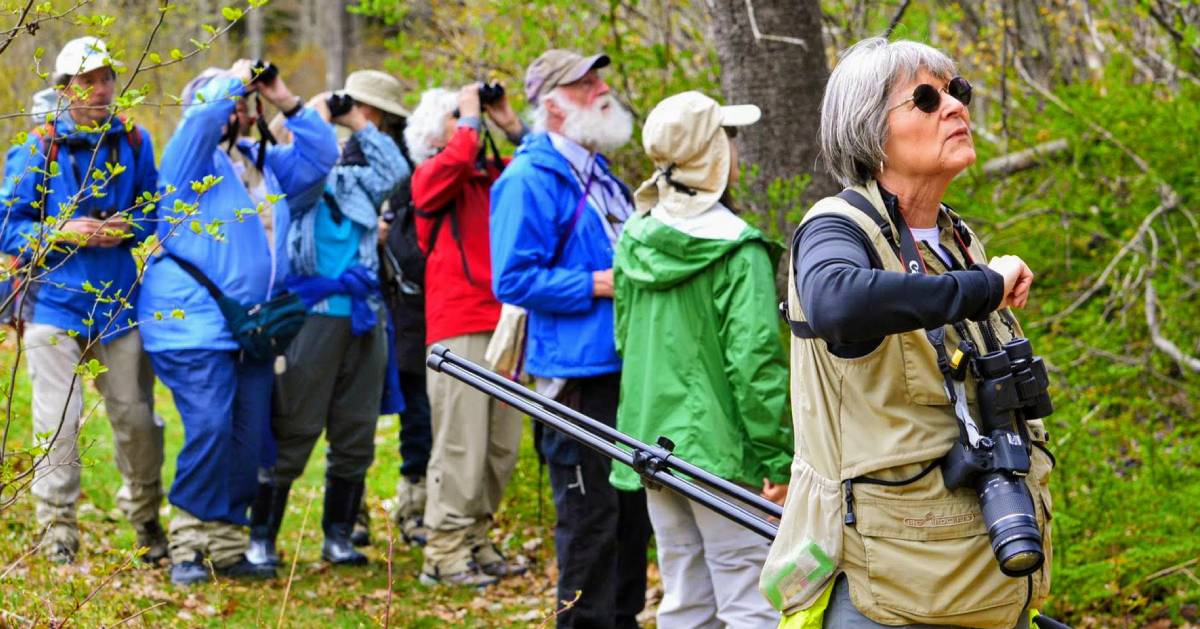
Morning air on a mountain trail carries a quiet rhythm that many hikers miss. Beneath the rustle of leaves and the distant sound of wind across ridges, birds fill the forest with motion and song. I began paying attention to those sounds during long hikes, noticing how each call hinted at a hidden presence nearby. That small shift in attention turned ordinary walks into a kind of exploration, where every bend in the trail might reveal a flash of feathers or the silhouette of wings against the sky.
Birding on the trail blends two pleasures into one experience. Hiking brings the landscape into view, while birding adds a layer of discovery that makes the environment feel alive and responsive. Over time, the forest stops feeling like a backdrop and starts to feel like a community of moving creatures. Even beginners can step into this world with a little patience and curiosity.
Birdwatching does not require expensive gear or expert knowledge to begin. A willingness to slow down and observe carefully matters far more than any equipment. With practice, small details such as movement patterns, calls, and habitat clues start to reveal the identity of the birds around you. The trail becomes both a path forward and a classroom.
Why Mountain Trails Are Perfect for Birding
Mountain trails create a unique environment where many bird species thrive. Elevation changes, diverse plant life, and shifting temperatures create several small habitats along a single hike. As I walk from the lower forest to higher ridges, the bird activity often changes dramatically. Some species prefer dense undergrowth while others stay close to open slopes or tall canopy trees.
The variety along a trail keeps birding interesting even for beginners. A single morning hike might include woodpeckers tapping against tree bark, small songbirds darting through shrubs, and hawks circling overhead. Each section of the trail holds its own rhythm of movement and sound. Paying attention to those transitions reveals how birds adapt to different parts of the mountain.
Trails also make birding easier because they provide natural observation routes. Instead of pushing through thick vegetation, I can quietly follow a path and watch the surrounding forest. Birds often remain unaware of a calm hiker moving steadily along a trail. That quiet approach increases the chances of seeing them behave naturally.
Essential Gear for Beginner Birding
Birding equipment does not have to be complicated. A comfortable pair of binoculars is the most helpful tool for spotting details from a distance. Even a modest pair can reveal colors, markings, and behaviors that the naked eye might miss. Carrying binoculars during a hike quickly becomes second nature.
A small notebook or phone app also helps track observations. I like to jot down descriptions of birds I notice, including colors, calls, and where I saw them along the trail. Those notes become valuable references later when identifying species. Writing things down also sharpens attention because it encourages careful observation.
Clothing plays a role as well. Neutral colors help blend into the forest, making birds less likely to notice sudden movement. Comfortable shoes and weather-appropriate layers keep the focus on the trail rather than discomfort. Good preparation allows the mind to stay focused on the sounds and sights of bird activity.
Reading the Sounds of the Forest
Sound often reveals birds before sight ever does. The forest carries layers of chirps, whistles, and calls that signal activity in the canopy and undergrowth. Early in my birding experience, many of those sounds blended together into a confusing chorus. With practice, certain patterns began to stand out.
Short bursts of repeated notes might indicate a territorial call from a songbird. Rapid tapping often signals a woodpecker searching for insects beneath bark. Even the sudden silence of birds can reveal the presence of a predator nearby. Listening carefully turns the forest into a map of activity.
Recognizing bird calls takes patience. I sometimes focus on just one sound and follow it quietly through the trees. Eventually the bird appears, connecting the sound with a physical form. That moment of recognition builds confidence and makes future sightings easier.
Watching Movement Instead of Color
Many beginners search for bright colors when spotting birds, but movement usually provides the first clue. Leaves shaking slightly, a branch bouncing, or a quick dart across the trail often signals a bird nearby. I learned to watch the edges of my vision for those subtle shifts in motion.
Birds also move in distinctive ways. Some hop along branches while others glide between trees. Certain species flick their tails constantly while others pause in stillness before flying again. Observing these patterns helps narrow down possible identities.
Movement also reveals feeding habits. Small birds may cling upside down on branches while searching for insects. Larger birds might patrol open air spaces looking for prey below. Paying attention to behavior adds context that color alone cannot provide.
Trail Habitats That Attract Birds
Different sections of a mountain trail host different bird communities. Dense forest areas usually hold smaller songbirds that rely on thick cover for protection. Their quick movements through shrubs and low branches make them challenging but rewarding to observe.
Open clearings attract another group of birds entirely. These areas allow species that hunt insects in flight to glide through the air freely. I often pause at meadow edges because birds appear there more visibly against open space.
Higher elevations may host birds adapted to cooler conditions and thinner vegetation. Wind patterns, sunlight exposure, and tree types all influence which birds appear along the ridge. Exploring these changes along a trail adds variety to each birding trip.
Quiet Movement Along the Trail
Birds react strongly to sudden noise or quick gestures. A calm pace along the trail helps avoid startling them. I try to move slowly, placing each step carefully and pausing often to listen.
Standing still can be surprisingly effective. Birds frequently resume normal activity once they decide a motionless figure is harmless. During those moments, the forest seems to come alive again as birds move around the area.
Patience becomes the greatest advantage. Rushing through a trail might cover more distance but reveals fewer wildlife encounters. Slowing down allows small details to emerge, from rustling leaves to distant calls that lead to unexpected sightings.
Identifying Birds Without Stress
Beginners sometimes feel pressure to identify every bird immediately. That pressure can take away from the enjoyment of simply observing. I prefer to focus on noticing characteristics first and identifying the species later.
Color patterns, body size, beak shape, and behavior all provide useful clues. A quick sketch or description written in a notebook helps capture those details before they fade from memory. Later, a field guide or birding app can assist with identification.
This relaxed approach makes birding feel more like exploration than a test. Some birds remain mysteries for a while, and that is part of the fun. Each unanswered question creates motivation to return to the trail again.
Seasonal Changes in Trail Birdlife
Bird activity shifts dramatically throughout the year. Spring brings migration, filling mountain trails with species passing through on long journeys. The forest sounds especially vibrant during those weeks as birds sing and establish territories.
Summer often reveals nesting behaviors. Adult birds move constantly while gathering food for chicks hidden in trees or shrubs. Watching these routines offers glimpses into the hidden lives of birds raising their young.
Autumn migration introduces another wave of travelers. Some birds prepare for colder climates while others head toward warmer regions. Even winter holds surprises, with hardy species adapting to colder conditions along the mountain slopes.
Respecting Wildlife While Birding
Birding carries a responsibility to protect the wildlife being observed. Maintaining distance ensures birds can continue their natural behavior without stress. Approaching too closely can disrupt feeding or nesting activities.
Staying on marked trails also helps preserve delicate habitats. Many ground-nesting birds rely on undisturbed vegetation for protection. Respecting those boundaries keeps both birds and ecosystems safe.
Photography and observation should never interfere with a bird’s wellbeing. Quiet appreciation often leads to the most meaningful encounters. The goal remains witnessing wildlife without altering its natural rhythm.
Turning Hiking Into A Wildlife Adventure
Birding transforms a simple hike into a layered experience. Instead of focusing only on reaching a destination, each step becomes part of an unfolding discovery. The trail reveals small dramas of survival, movement, and communication.
Over time, familiar trails develop personalities. Certain trees become reliable places for specific species. Particular bends in the path might host regular morning songs. These patterns create a deeper connection to the landscape.
Sharing birding experiences with friends or fellow hikers adds another dimension. Comparing sightings and sounds encourages curiosity and collective learning. Even beginners can contribute observations that help others notice details they might have missed.
Growing Skills Through Repeated Walks
Birding improves gradually through repeated time outdoors. Each hike adds a small layer of familiarity with bird behavior and habitats. Familiar trails become easier places to notice subtle changes in activity.
I often return to the same mountain paths throughout the year. Seeing how bird populations shift across seasons creates a richer understanding of the environment. The forest begins to feel less mysterious and more like a living system.
Practice also sharpens listening and observation skills. Sounds that once blended together start separating into recognizable patterns. What seemed invisible before becomes easier to spot.
The Quiet Reward of Trail Birding
Birding along mountain trails offers a quiet kind of reward. The excitement rarely comes from dramatic events but from small moments of discovery. A flash of bright feathers in the morning light or a melodic call echoing through trees can stay in memory long after the hike ends.
These experiences deepen appreciation for the landscapes that hikers often pass through quickly. The forest becomes more than scenery because it reveals layers of life hidden in branches and undergrowth. Paying attention to birds opens a window into those layers.
A beginner stepping onto a trail with curiosity already has everything needed to start birding. The mountains provide the stage, and the birds bring constant motion and sound. With patience and observation, the trail becomes a place where every walk holds the possibility of a new encounter.
