

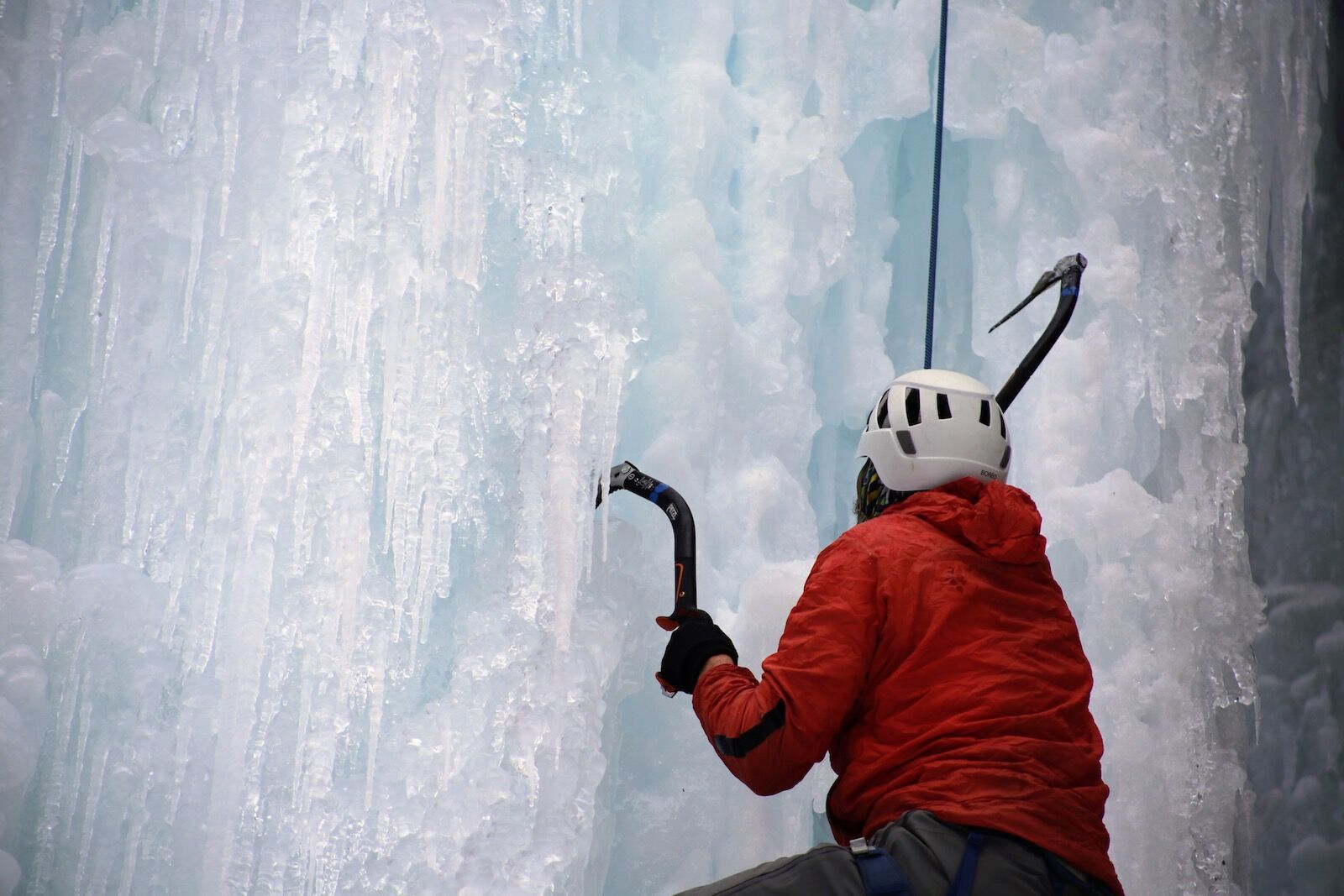
Cold air settles into the valley long before sunrise, and the frozen waterfall ahead glows faintly blue in the early light. The first time standing beneath a wall of ice with tools hanging from a harness, the scene looks dramatic enough to make anyone question their sanity. Friends often ask the same thing after seeing photos of climbers dangling from frozen cliffs: is ice climbing really as terrifying as it looks?
The honest answer is complicated. Ice climbing certainly carries risk, and the environment can feel intense. At the same time, the reality of climbing frozen waterfalls is far more controlled, methodical, and surprisingly approachable than most people imagine. Beneath the dramatic appearance lies a craft built on technique, preparation, and a deep respect for the mountain environment.
The Intimidating Image Of Frozen Walls
A frozen waterfall has a way of dominating the landscape. Blue ice pillars hang from cliffs like massive sculptures, and the thought of swinging sharp metal tools into that surface can seem reckless to anyone watching from below. Photos and videos rarely capture the steady rhythm of the climb, only the moment that looks the most extreme.
Standing at the base of a climb, the ice often looks vertical and unforgiving. The mind fills in worst-case scenarios before the first step even begins. People picture brittle ice shattering beneath them or climbers dangling from a single pick.
The reality is much less dramatic. Ice that is suitable for climbing is typically solid, layered, and stronger than it appears. Climbers test every placement and move gradually upward, creating a steady progression rather than a chaotic fight against gravity. What appears frightening from a distance often feels surprisingly controlled once the process begins.
Why Ice Holds Better Than You Expect
One of the biggest misconceptions about ice climbing is the belief that the ice is fragile. The mental image of thin winter ice cracking under pressure carries over from frozen lakes and ponds. Climbing ice, however, forms in completely different ways and behaves differently under stress.
Frozen waterfalls and alpine ice flows build layer by layer as water repeatedly freezes. This process creates dense, compact ice that can support enormous force when tools and crampons are placed correctly. A well-placed ice tool sinks into the surface with a satisfying thunk that feels far more secure than it looks.
Climbers also rely on screws drilled into the ice for protection. These hollow metal screws bite deep into the frozen wall and anchor the rope system. Knowing that these anchors are designed to hold thousands of pounds transforms the experience from frightening to calculated. The system works because every step is backed by equipment engineered specifically for the environment.
The Rhythm Of Tools And Crampons
Ice climbing quickly becomes a rhythm. Two tools in the hands, sharp crampons on the boots, and a steady sequence of movements carry a climber upward. Swing, set the tool, test the placement, step up with the feet, and repeat.
The most surprising part is how much of the climb depends on footwork rather than brute strength. Crampons bite into the ice like tiny spikes, allowing climbers to stand comfortably once their feet are set. The tools stabilize the upper body, but the legs do much of the real work.
That rhythm transforms the climb into something almost meditative. The metallic sound of tools striking ice echoes through the canyon, followed by the crunch of crampons stepping higher. Fear fades as the movement becomes familiar and the body settles into a steady pace.
Fear At The Base Of The Climb
Standing beneath a frozen route can still make the heart race. Even experienced climbers admit that the moment before leaving the ground carries a surge of nerves. The height, the cold air, and the towering ice all combine into a powerful mental challenge.
Fear, however, often fades once movement begins. The brain shifts from imagining outcomes to focusing on the next placement. Attention narrows to the surface directly in front of the climber, and the climb becomes a series of manageable steps rather than one overwhelming wall.
That shift in focus is one of the most fascinating aspects of ice climbing. Instead of eliminating fear entirely, the sport teaches climbers how to move through it. The process builds confidence with every tool placement and every secure step higher.
The Role Of Partners On The Rope
Ice climbing rarely happens alone. A rope team usually consists of two climbers who share responsibility for safety and progress. One climber leads upward while the other manages the rope from below, ready to catch a fall if it happens.
This partnership changes the experience dramatically. A trusted partner on the ground keeps the rope tight and communicates constantly throughout the climb. Simple words of encouragement or guidance can make a big difference when the ice steepens or the wind picks up.
Trust grows naturally in that environment. Each climber depends on the other, creating a sense of teamwork that is difficult to find in many outdoor activities. By the time the climb ends, that partnership often feels as important as reaching the top.
Cold Air And Clear Focus
The winter environment adds another layer to the experience. Ice climbing takes place in temperatures that demand preparation and awareness. Breath turns into clouds, gloves stiffen in the cold, and every movement must balance warmth with efficiency.
Cold conditions sharpen concentration. Small mistakes become easier to notice because the body pays closer attention to its surroundings. The crunch of snow underfoot and the faint creak of ice overhead become part of the sensory landscape.
Despite the cold, the environment can feel peaceful. Frozen waterfalls often form in quiet mountain valleys where summer crowds rarely venture. The silence of winter, broken only by the sound of tools striking ice, creates a unique atmosphere that many climbers find addictive.
What The Mind Learns On Ice
Climbing ice teaches patience more than anything else. Every movement must be deliberate, and rushing usually leads to wasted energy. The process encourages calm thinking and steady breathing, especially when the climb steepens.
Mental discipline becomes just as important as physical ability. A climber learns to evaluate the ice carefully, choose placements thoughtfully, and move with efficiency. That mindset carries beyond the climb itself, influencing how challenges are approached in other parts of life.
Confidence builds gradually with each route completed. A wall that once looked terrifying begins to look inviting instead. The mind shifts from doubt to curiosity, wondering what the next frozen line might reveal.
A Beginner’s Perspective From The Wall
Watching ice climbing from the ground often exaggerates its intensity. Tools swing, ice fragments scatter, and climbers appear suspended in dramatic positions. Up close, the experience feels much more grounded and methodical.
Standing on a solid set of crampons, feeling both tools anchored firmly in the ice, brings a surprising sense of stability. The body aligns with the slope of the frozen wall, and movement becomes natural rather than awkward. Each secure placement reinforces the idea that the system works.
Even beginners notice this transformation quickly. Initial hesitation gives way to curiosity as the climb progresses. Instead of focusing on fear, attention shifts toward technique and the simple satisfaction of moving upward.
Why Ice Climbing Looks Scarier Than It Feels
Part of the sport’s reputation comes from its visual drama. Few outdoor activities look as intense as someone hanging from a vertical sheet of ice with sharp tools. The steep angles, icy environment, and winter setting combine into a striking image.
Photographs freeze climbers in moments that highlight exposure and height. Those moments rarely show the careful preparation behind them. Hours of studying conditions, placing protection, and building anchors happen outside the frame.
From the climber’s perspective, the experience unfolds slowly and thoughtfully. Each step is deliberate, and the equipment provides layers of safety that spectators may not notice. What appears reckless from afar often feels like a series of calculated moves while on the wall.
The Quiet Reward At The Top
Reaching the top of an ice climb brings a particular kind of satisfaction. The final steps onto solid ground feel different from summiting a rocky peak. Ice climbing demands focus the entire way up, so stepping off the wall releases a wave of relief and accomplishment.
Looking down at the frozen route reveals a completely new perspective. The intimidating wall now appears as a path of carefully placed steps and tool marks leading upward. What once seemed impossible becomes something tangible and real.
The moment also carries a sense of quiet appreciation for the landscape. Winter mountains have a stillness that few other environments match. Standing above a frozen waterfall with snow-covered peaks in the distance reminds climbers why they returned to the cold in the first place.
So, Is It Really That Scary?
Ice climbing can certainly feel intimidating at first glance. The frozen walls, sharp tools, and winter setting combine into an image that suggests danger and intensity. That reaction is completely natural, especially for people seeing the sport for the first time.
Yet the deeper reality tells a different story. Technique, equipment, teamwork, and careful decision-making transform the experience into something far more approachable than it appears. Fear may exist at the base of the climb, but it rarely dominates the entire journey upward.
What remains after the climb is not terror but a sense of discovery. Ice climbing reveals a winter landscape that most people never experience, and it offers a unique challenge that rewards patience and curiosity. The walls may look frightening from a distance, but the climb itself often feels like a conversation with the mountain, one careful step at a time.
