

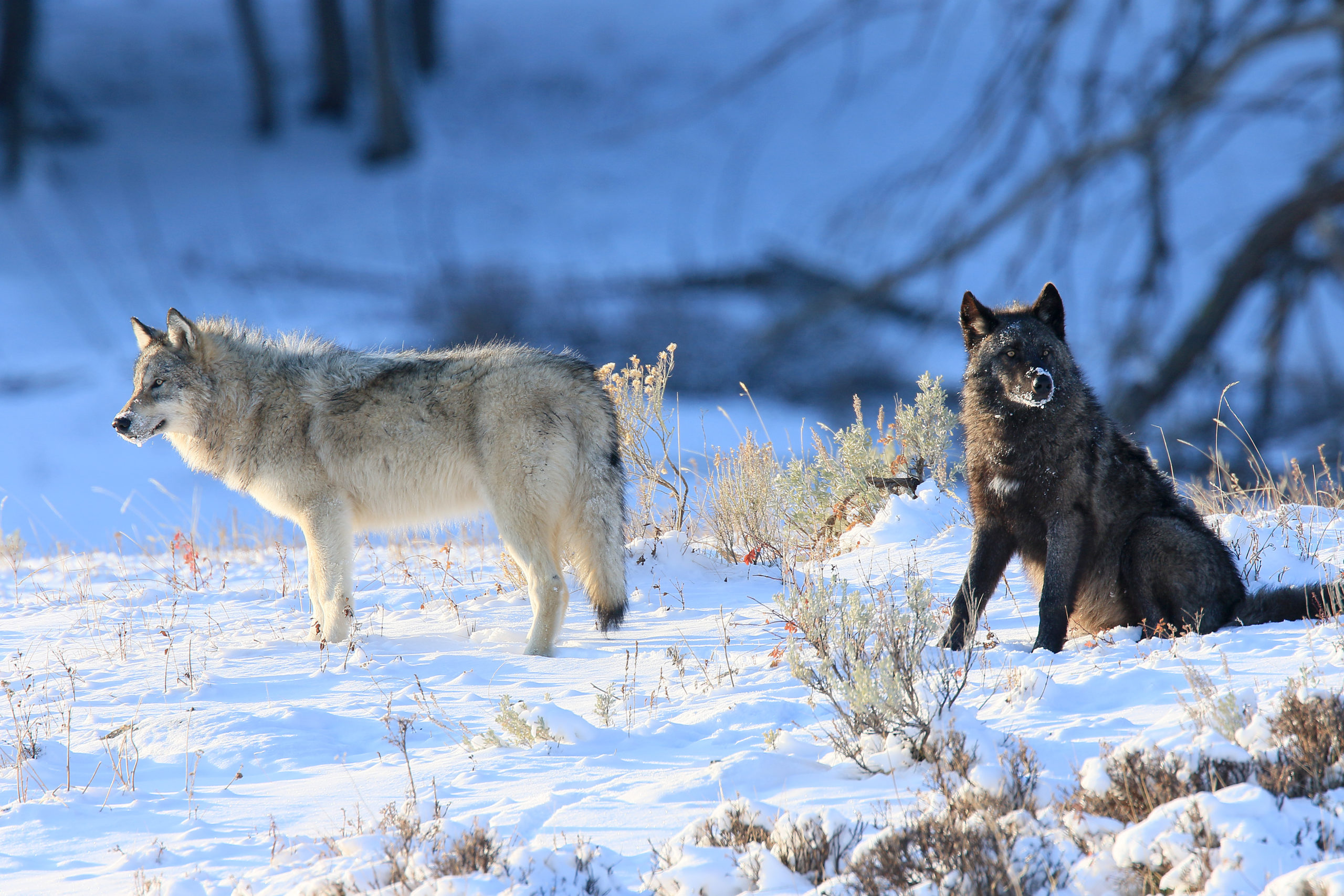
Mountain landscapes hold a quiet intensity that changes the way a person moves, listens, and observes. Wolves belong to that same rhythm. Their presence often reveals itself long before a clear sighting ever happens, and paying attention to subtle details becomes the difference between guessing and actually recognizing them nearby.
I spend a lot of time moving slowly through mountain terrain, watching the ground, listening to distant sounds, and scanning ridgelines. Wolves rarely appear suddenly in front of you like animals in a park. Their world is cautious and layered with signals, and noticing those signals makes it possible to witness them without crossing the invisible boundary that keeps both humans and wildlife safe.
Spotting wolves without getting too close requires patience more than luck. The mountains provide clues everywhere, from the direction of the wind to faint movement against a rocky slope. Paying attention to these details allows a person to experience the presence of wolves while respecting the distance they need.
Reading The Landscape For Signs Of Wolf Activity
Mountain terrain tells stories if you know where to look. Wolves prefer areas that provide both visibility and escape routes, which often means ridgelines, open meadows between tree lines, and valleys where prey animals gather. I often scan these places slowly with my eyes before moving any closer.
Tracks are usually the first clear indication that wolves have passed through recently. Their paw prints appear larger and more elongated than those of most domestic dogs, and they tend to move in straight lines rather than wandering randomly. When snow or soft soil covers a trail, the pattern of their movement becomes surprisingly easy to follow from a distance.
Scat also provides clues about recent activity. It often contains fur, bone fragments, and sometimes a chalky appearance from digested calcium. Seeing multiple signs clustered within a short stretch of trail usually means wolves have been traveling through that area regularly, which makes nearby vantage points worth watching.
Listening For Sounds That Reveal Their Presence
Mountains carry sound farther than many people realize. On calm mornings or evenings, a distant howl can travel for miles across valleys and slopes. I pause often during quiet moments because wolves communicate frequently, especially during early morning and late evening hours.
Their howls vary depending on the situation. A long single howl may signal a wolf locating its pack, while a chorus of voices often means several wolves responding together. Even faint or broken sounds echoing across a valley can reveal the general direction of a pack.
Other sounds can also signal wolves nearby. Sometimes prey animals such as deer or elk begin moving nervously or making warning calls. When those animals suddenly shift direction or become silent, it often means a predator has entered the area, and wolves are a strong possibility in many mountain regions.
Watching Prey Animals For Behavioral Clues
Prey animals serve as natural early warning systems in the mountains. Deer, elk, and even smaller animals constantly scan their surroundings, and their behavior can hint at predators long before a person notices them.
I often watch herds from a distance through binoculars. Calm animals usually graze slowly with relaxed posture, but nervous herds bunch together and keep their heads raised. If they suddenly stare toward a particular tree line or ridge, it often means something is moving there.
A sudden burst of movement from prey animals can reveal wolves traveling nearby. Instead of running wildly in all directions, animals typically move as a group away from the threat. Observing where they are looking or fleeing toward often leads the eye directly to the location where wolves may appear.
Identifying Wolves From A Safe Distance
Wolves can look surprisingly similar to large dogs at first glance, especially when seen far away. Several physical traits help distinguish them if you observe carefully through binoculars or a spotting scope.
Their bodies appear long and lean with long legs built for endurance. The chest is narrower than many dogs, and their tails usually hang straight down rather than curling upward. Wolves move with a steady, efficient stride that conserves energy during long travel across mountain terrain.
The head shape also differs from most domestic dogs. Wolves often have broader foreheads, larger paws, and ears that appear slightly shorter relative to their head size. Watching their movement for a few moments usually confirms the difference, as their gait looks purposeful and smooth rather than playful or erratic.
Using Elevation And Vantage Points To Observe Safely
Higher ground offers one of the safest ways to observe wildlife in mountainous regions. A ridge or overlook allows a clear view of valleys and meadows where wolves may travel without placing you directly within their path.
I prefer finding a vantage point where wind moves toward me rather than away from me. Wolves rely heavily on scent, and standing downwind keeps human scent from drifting into areas where they might pass. Remaining still also prevents sudden movement that could alert them.
Patience becomes important in these moments. Wolves often travel long distances across open ground, and a pack might appear hours after signs of activity were first noticed. Waiting quietly with a wide view of the terrain often leads to the most rewarding sightings.
Recognizing The Best Times Of Day For Sightings
Wolves are most active during twilight hours, particularly just before sunrise and shortly after sunset. These periods allow them to move and hunt while avoiding the brightest daylight and deepest darkness.
I often begin watching open areas while the sky is still dim. During that early morning light, movement across a distant hillside becomes easier to notice because the animals stand out against pale ground or snow. The same effect occurs during the fading light of evening.
Midday sightings are less common but still possible, especially in colder months. Wolves sometimes travel throughout the day when temperatures remain low or when prey animals move during daylight hours. Spending time outdoors across different times of day increases the chance of seeing them.
Staying Hidden Without Disturbing The Area
Remaining unnoticed is essential for observing wolves responsibly. Loud movement, strong scents, and sudden changes in the environment can cause them to vanish long before you ever realize they were nearby.
Neutral clothing that blends into the landscape helps reduce visual contrast against rocks and trees. Slow movement matters even more than color, though, because sudden motion catches attention instantly in the wild. I try to move gradually and pause often when scanning the terrain.
Wind direction also plays a major role. Wolves possess an extraordinary sense of smell, and human scent carried across a valley can alert them from remarkable distances. Paying attention to wind patterns helps prevent accidentally pushing them away from an area where they might otherwise appear.
Noticing Travel Routes Wolves Prefer
Wolves tend to follow predictable travel routes across mountain terrain. Game trails, ridgelines, frozen riverbeds, and open valleys often serve as natural corridors that allow them to move efficiently between hunting areas.
I often study maps and terrain features before heading out. Narrow valleys between mountain slopes frequently funnel wildlife through specific paths, and wolves take advantage of these routes while traveling between territories or following migrating prey.
Repeated signs such as tracks appearing in the same direction across multiple days usually reveal these travel corridors. Watching those areas from a safe vantage point provides a much higher chance of seeing wolves without interfering with their natural movement.
Maintaining Respectful Distance At All Times
Seeing wolves in the wild brings a powerful feeling that is difficult to describe. Their presence carries a quiet intensity that reminds you that the mountains still belong to creatures that live entirely by instinct and cooperation.
Getting too close can disrupt their behavior and even create dangerous situations. Wolves generally avoid humans, but approaching them intentionally may cause them to abandon hunting areas or move their pack away from important territory. Respecting distance protects both the observer and the animals.
I rely heavily on binoculars or a spotting scope when watching wildlife. These tools allow clear observation from hundreds of meters away while leaving the wolves completely undisturbed. That distance preserves the authenticity of the encounter and ensures the moment remains safe.
Moments That Make The Wait Worthwhile
Long stretches of quiet observation often pass before anything happens. Hours may go by with nothing more than shifting light across the mountains and the occasional movement of deer in the distance. Patience gradually becomes part of the experience rather than an obstacle.
Then a small detail catches the eye, perhaps a gray shape moving along a distant ridge or several animals crossing an open meadow in steady formation. Wolves travel with a sense of purpose, their movement coordinated and efficient as they cover ground together.
Watching them from afar creates a powerful reminder of how balanced mountain ecosystems can be when predators move freely across the landscape. Observing them responsibly keeps that balance intact while allowing a rare glimpse into the quiet lives of one of the wildest animals in the mountains.
