

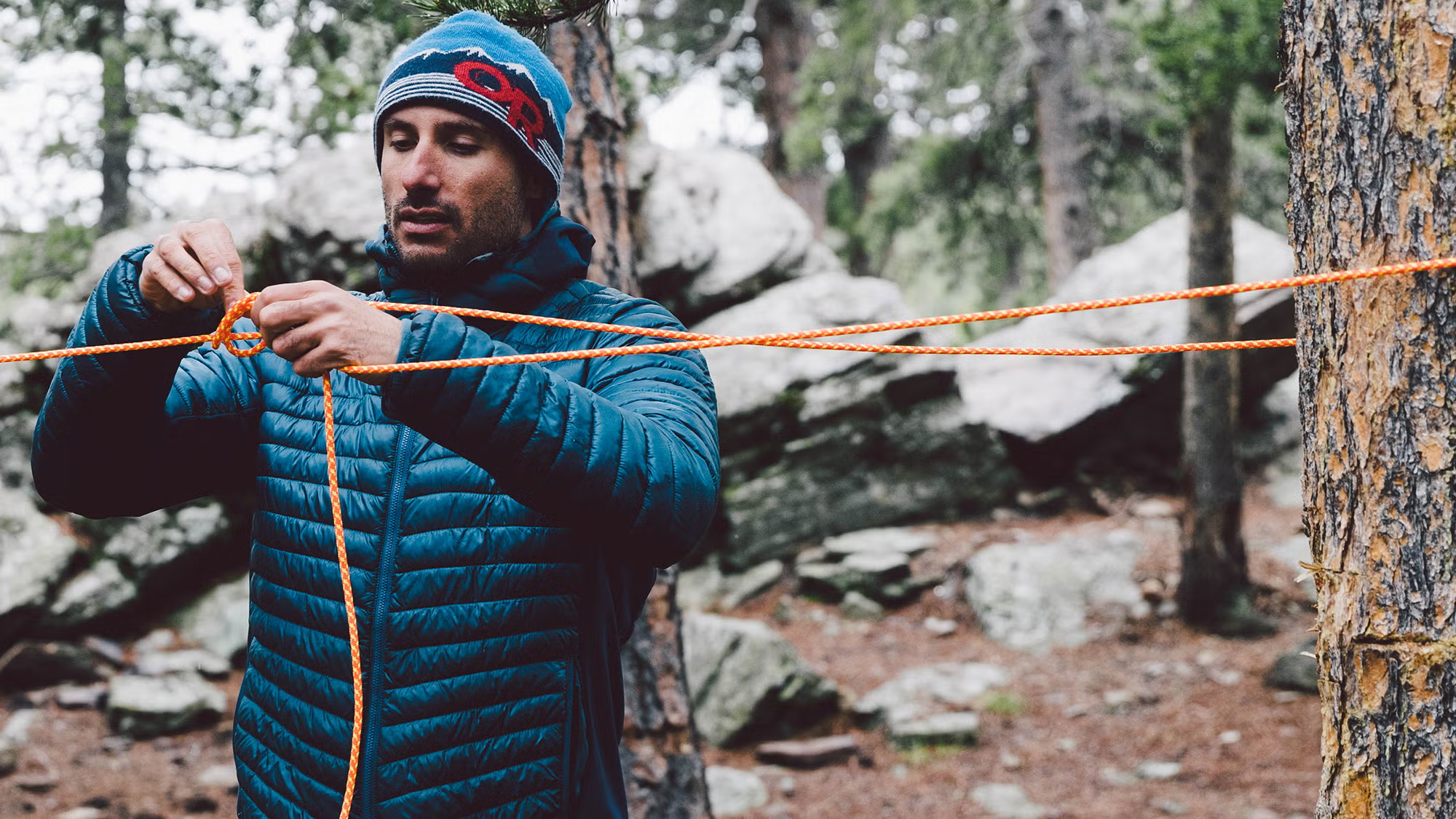
Why Knot Skills Matter In The Mountains
Wind howls across exposed ridgelines, rain rolls in without warning, and daylight fades faster than expected once you’re deep in the backcountry. In those moments, a rope and the knots tied into it become more than simple tools. They become the difference between improvisation and control.
Mountains demand preparation, but not everything goes according to plan. A tarp may need to be secured during a sudden storm, a bear bag must be hung away from camp, or gear may need to be hauled up a steep ledge. Solid knot skills make these tasks efficient and reliable. Without them, even strong rope becomes little more than a tangled line.
Practice builds the confidence needed to tie knots quickly and correctly in harsh conditions. Fingers go numb in cold wind, gloves make dexterity difficult, and visibility fades near dusk. In those moments, muscle memory matters more than reference guides or second guesses.
Knot knowledge also reduces risk. Sloppy knots slip, loosen, or jam under tension. A well-tied knot holds steady, distributes force properly, and can often be untied after heavy loading. Outdoor explorers rely on a small set of dependable knots that work across many situations.
Mountains reward simplicity. Instead of memorizing dozens of complicated techniques, experienced hikers and climbers rely on a core group of knots they can tie without hesitation. These knots become instinctive tools, ready whenever rope becomes part of the solution.
The Bowline: A Loop That Never Slips
The bowline stands among the most dependable knots in outdoor travel. It creates a fixed loop at the end of a rope that does not tighten under tension. Once tied correctly, the loop remains stable even after heavy loading.
This knot proves incredibly useful for securing rope around objects such as trees, rocks, or anchor points. The fixed loop makes it easy to clip gear or attach another rope without worrying about the loop shrinking or distorting. Stability under pressure gives the bowline a reputation for reliability in demanding situations.
Many explorers appreciate how easy it is to untie after strain. Some knots cinch so tightly under weight that they become almost impossible to loosen. The bowline avoids that problem, allowing gear to be packed quickly once the task is finished.
Cold weather makes knot efficiency even more valuable. Thick gloves and stiff fingers can turn complicated knots into frustrating puzzles. The bowline’s structure remains manageable even in those conditions once the motion becomes familiar.
A simple memory trick often helps anchor the process: the rope forms a small loop, the working end passes through, circles the standing line, and returns back through the loop. Repetition makes this sequence second nature until tying it requires little thought.
The Clove Hitch: Fast And Adjustable
Few knots match the speed of a clove hitch. It forms quickly and adjusts easily, which makes it ideal for temporary anchors. In fast-moving outdoor situations, that speed matters.
The clove hitch works well when attaching rope to a tree, post, or carabiner. A simple wrap and crossing turn create a knot that holds under tension yet loosens easily when needed. Camp setups often rely on this knot to secure tarps or lines quickly.
Adjustability is its greatest strength. The knot slides along the rope until tension is applied, allowing precise positioning. That flexibility makes it useful when tension needs fine adjustment, such as tightening a shelter line.
Despite its convenience, the clove hitch benefits from backup in high-load situations. Additional knots or tension help prevent gradual slipping. Outdoor explorers often pair it with a half hitch for added security.
Cold conditions rarely interfere with tying it because the movement remains simple and quick. With practice, the clove hitch can be tied in seconds, even in low light or while wearing gloves.
The Taut-Line Hitch: Reliable Tension For Shelters
Weather rarely respects a campsite. Rain, wind, and shifting ground demand adaptable shelter setups. The taut-line hitch provides a solution by creating an adjustable loop that grips under tension.
This knot shines when securing tent guy lines or tarps. It allows the line to slide for adjustment but locks firmly once tension pulls against it. Campsites stay tight and stable without constant retying.
Nightfall often brings dropping temperatures and rising winds. A tarp that seemed tight at sunset may sag by midnight as humidity and temperature change. The taut-line hitch allows quick adjustments without dismantling the entire setup.
Its design wraps the working end around the standing line multiple times before finishing with a half hitch. Those wraps create friction that holds the knot in place under load. The result is a knot that balances movement and grip.
Experienced backpackers rely on this knot because it saves time and effort. Instead of cutting new lines or retying complicated knots, a simple slide along the rope restores tension instantly.
The Figure Eight Knot: Strength And Visibility
Few knots match the strength and clarity of the figure eight. Its shape resembles the number eight, which makes it easy to inspect visually. Climbers trust this knot for critical connections because mistakes stand out clearly.
The figure eight creates a strong loop that resists slipping even under heavy loads. That strength makes it a favorite in climbing systems, rescue setups, and hauling tasks. Outdoor explorers value its dependability when safety matters most.
Inspection plays a major role in knot reliability. A messy knot hides flaws, but the figure eight displays its structure openly. Each curve and turn sits clearly in place, allowing quick confirmation that the knot is tied correctly.
Untying after heavy use can require patience, yet it remains manageable compared with many tight knots. That balance between strength and usability keeps the figure eight in constant use across outdoor disciplines.
Cold weather rarely affects its reliability once tied properly. Even with stiff rope or frozen fingers, the pattern remains clear and recognizable. Repetition eventually builds the confidence needed to tie it without hesitation.
The Sheet Bend: Joining Two Ropes Securely
Outdoor travel often involves ropes of different sizes. A thin cord might need to connect with thicker rope during repairs, shelter building, or improvised gear systems. The sheet bend handles this task effectively.
This knot joins two ropes without requiring equal diameter or stiffness. The thicker rope forms a loop while the thinner rope passes through and wraps around it before tucking beneath itself. The result holds firmly under tension.
Unequal rope sizes can create slipping problems with many knots. The sheet bend compensates for that difference by tightening around the loop of the thicker rope. This design keeps the connection stable even when the ropes behave differently.
Outdoor explorers sometimes reinforce the knot with an additional turn known as the double sheet bend. Extra friction adds security when ropes carry heavier loads or remain under tension for long periods.
Practical field repairs often depend on knots like this. A broken guy line, damaged cord, or improvised hauling system becomes manageable once two rope ends can be joined reliably.
The Alpine Butterfly: A Loop In The Middle Of The Rope
Certain tasks require a loop that sits in the middle of a rope rather than at the end. The alpine butterfly provides that capability while maintaining excellent strength and balance.
This knot creates a fixed loop that can handle load from multiple directions. Climbers often rely on it for attaching carabiners or isolating damaged rope sections. Outdoor explorers appreciate its versatility in hauling and anchor setups.
Rope sometimes suffers abrasion or damage during extended trips. Instead of cutting the rope shorter, a butterfly loop can isolate the weak section and keep the system functional. This flexibility becomes valuable in remote terrain.
Tension distributes evenly through the knot, which prevents twisting or distortion. That balanced structure contributes to its reliability under complex loads. Few knots manage this task as cleanly.
Although the tying process appears slightly more complex than others, repetition quickly removes the difficulty. Once memorized, the alpine butterfly becomes a powerful tool in the rope kit.
Practice Until Knots Become Instinct
Rope skills develop through repetition rather than memorization alone. A knot tied once during preparation may feel unfamiliar weeks later in the field. Regular practice keeps the movements fresh and automatic.
Outdoor explorers often practice while relaxing at camp or sitting beside the trail. A short piece of rope becomes a quiet training tool that reinforces muscle memory. Each repetition builds speed and confidence.
Conditions in the mountains rarely favor careful instruction. Rain, wind, darkness, and cold all reduce dexterity and focus. Instinctive knot tying keeps tasks moving even when concentration fades.
A small collection of dependable knots covers most outdoor situations. The bowline, clove hitch, taut-line hitch, figure eight, sheet bend, and alpine butterfly create a versatile foundation. Together they handle shelter building, rope joining, anchors, hauling, and emergency improvisation.
Preparation transforms rope from simple cordage into a reliable problem-solving tool. With a few well-practiced knots committed to memory, outdoor explorers gain quiet confidence in unpredictable terrain. That confidence travels lightly yet proves invaluable wherever the trail leads.
