

Long days on a mountain trail quickly reveal how dependent modern gear has become on electricity. GPS units, headlamps, phones, satellite messengers, and cameras all need power, and on multi-day treks that demand grows quickly. Carrying enough spare batteries can add weight that no backpacker wants, especially when climbing thousands of feet of elevation. Solar chargers promise a simple solution: endless energy pulled straight from the sky.
Reality on the trail, however, rarely matches the marketing photos of bright sun and perfectly angled panels. After many trips with different solar setups strapped to my pack, I learned that some options genuinely help while others barely keep a device alive. Solar charging in the mountains works best with the right expectations, the right gear, and a bit of patience.
Why Power Matters on Remote Mountain Trails
Navigation tools and safety equipment make modern mountain travel far more secure than it once was. Phones now function as GPS units, map libraries, weather trackers, and emergency communication devices. Satellite messengers and locator beacons add another layer of safety, particularly in remote ranges where cell service disappears for days.
All of those tools depend on reliable energy. A drained battery halfway through a long trek can turn a useful tool into dead weight. During one extended ridge traverse, I noticed how quickly a phone battery disappeared when it handled navigation, photos, and occasional satellite messages. By the third day the battery gauge was already dipping into uncomfortable territory.
Solar chargers appeal because they extend that timeline. Instead of carrying four or five heavy battery packs, hikers can theoretically recharge throughout the day. That concept works, but the conditions on real trails make a huge difference in how effective solar power actually becomes.
Types of Solar Chargers Hikers Carry
Solar gear for backpacking usually falls into two categories: panel systems and integrated power banks. Each one solves the power problem in a slightly different way, and each comes with advantages and compromises.
Panel systems consist of folding solar panels that plug into a separate battery bank. The panels gather sunlight during the day, while the battery stores energy for charging devices later at camp. These systems tend to provide the most flexibility because the panel and battery capacities can be adjusted independently.
Integrated solar power banks combine both components into a single device. A small solar panel sits directly on the battery pack, allowing it to recharge slowly in sunlight. Many hikers initially gravitate toward these compact units because they look simple and lightweight, but trail experience often reveals their limitations quickly.
Weight, durability, and charging speed vary widely between models. Some compact panels barely trickle power into a battery, while larger folding arrays can recharge a decent battery pack over the course of a sunny afternoon.
Trail Conditions That Change Solar Performance
Sunlight in the mountains feels abundant, yet actual charging conditions fluctuate constantly. Tree cover, steep terrain, and shifting clouds often interfere with ideal exposure. A solar charger hanging off a backpack may spend much of the day shaded by the hiker’s body or the surrounding forest.
Orientation also matters more than most people expect. Solar panels work best when angled directly toward the sun. While hiking, panels bounce, tilt, and shift with every step, rarely staying in that optimal position for long. Even minor changes in angle can noticeably reduce charging efficiency.
Weather creates another major variable. High alpine areas may enjoy bright sun, but storms can roll in quickly and last for hours. A cloudy day dramatically slows solar output, and several overcast days in a row can nearly eliminate meaningful charging.
Temperature surprisingly affects performance as well. Solar panels actually work more efficiently in cool environments, which benefits mountain travelers, but batteries themselves can struggle in cold conditions, slowing charge acceptance.
What Actually Works in the Backcountry
Folding solar panels paired with a reliable power bank tend to perform best on extended treks. Panels in the 10- to 20-watt range strike a good balance between portability and meaningful energy production. They are large enough to gather useful sunlight while still fitting comfortably on the outside of a backpack.
A separate battery bank acts as a buffer between the panel and the devices. Instead of charging a phone directly from inconsistent sunlight, the panel fills the battery throughout the day. Later, that stored power charges electronics steadily in camp.
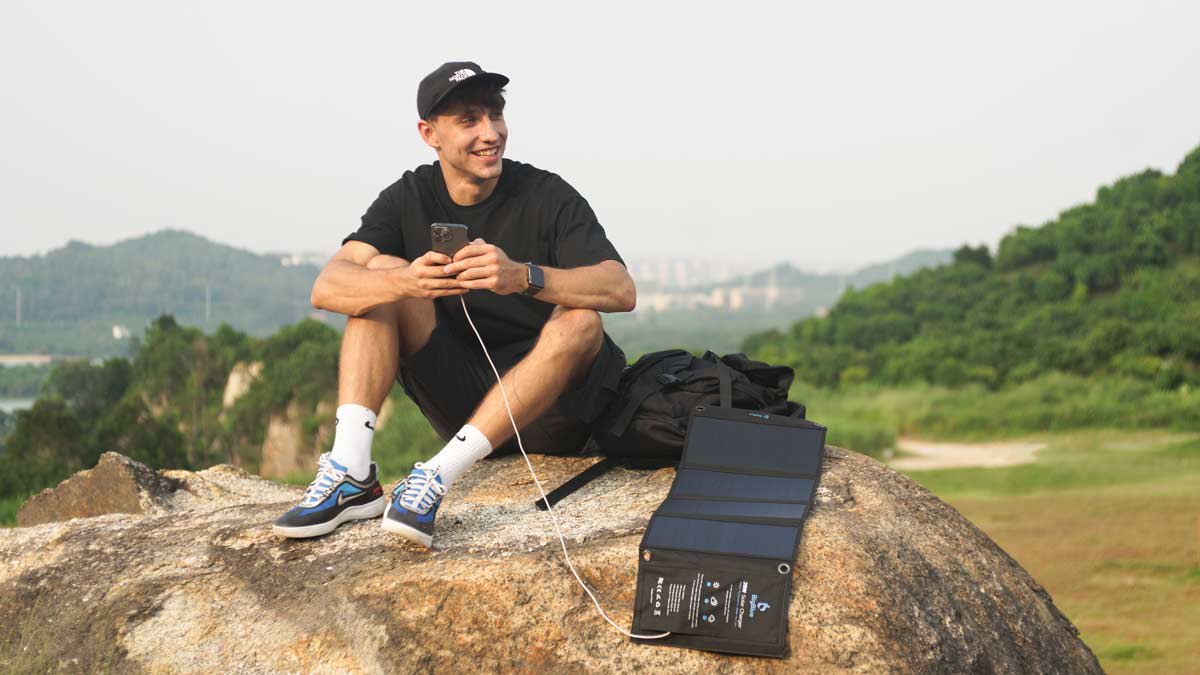
Placement matters just as much as equipment choice. I often stop during lunch breaks to lay the panel flat on a rock facing the sun. That simple adjustment dramatically improves energy collection compared to letting the panel dangle loosely from my pack all day.
High-quality cables also make a noticeable difference. Cheap cables waste power through resistance, which becomes obvious when solar charging already produces limited energy.
Solar Power Banks That Struggle on Long Trips
Compact solar power banks with tiny built-in panels often promise more than they deliver. The panels on these units are usually too small to gather meaningful energy during a normal hiking day. Even after hours in bright sunlight, the battery percentage may barely move.
The problem comes down to surface area. Solar power depends heavily on the size of the panel collecting sunlight. A panel only a few inches wide simply cannot capture enough energy to recharge a large battery in a reasonable amount of time.
Many hikers buy these units expecting them to recharge themselves each day. In reality, the solar panel mainly acts as a slow emergency trickle rather than a dependable charging method. The battery still needs to be filled from a wall outlet before the trip begins.
Durability also varies widely with these combined units. Because the panel sits directly on the battery casing, drops or impacts risk damaging the charging surface.
Panel Placement While Hiking
Attaching solar panels to a backpack looks convenient in photos, but results vary depending on terrain and sunlight direction. Panels mounted flat against the pack rarely face the sun directly for long periods. They often tilt sideways or face away as the trail twists through forests or valleys.
Still, this method can generate some energy during bright days above tree line. I typically clip the panel across the top of my pack where it receives the most direct light while hiking. The energy gained during those hours helps supplement more effective charging breaks later in the day.
Open ridgelines provide the best opportunities for passive charging. Wide alpine landscapes allow sunlight to reach the panel without interference from dense forest canopies. In those areas, even loosely mounted panels can slowly add charge throughout the day.
Steep forest trails, however, dramatically reduce solar exposure. In those conditions I rely far more on charging during rest stops rather than expecting continuous power generation while moving.
Campsite Charging Strategies
Evening camp often becomes the most productive time for solar charging. After setting up a tent and dropping the pack, the panel can finally be positioned properly toward the sun. That stability alone improves output significantly.
Late afternoon sunlight frequently arrives at a low angle, which makes panel orientation especially important. Propping the panel against a rock or log helps capture more direct rays than laying it flat on the ground.
Cooking dinner while the panel collects energy feels surprisingly satisfying. During long summer evenings, a well-positioned panel can still gather useful power for several hours after hiking ends.
Morning sunlight also plays a valuable role. Panels placed in direct light during breakfast can capture a quick burst of energy before the day’s hiking begins.
Weight Versus Energy Output
Solar chargers introduce an interesting trade-off between carried weight and energy independence. Larger panels generate more power but also add bulk and grams to a backpack already loaded with gear.
Short weekend trips rarely justify carrying solar equipment. A single fully charged battery bank usually provides enough energy for phones and GPS devices over two or three days. In those cases, solar panels simply add unnecessary weight.
Extended expeditions shift that calculation. On week-long or multi-week treks, solar charging begins to offset the need for multiple spare batteries. A lightweight panel paired with a medium battery bank can support navigation and communication gear for far longer than battery packs alone.
Finding the right balance depends on trip length, sunlight conditions, and the number of electronic devices being carried.
Durability in Harsh Mountain Environments
Mountain gear must survive constant abuse from weather, rocks, and repeated packing. Solar panels designed for backpacking often use flexible materials and reinforced stitching to withstand those conditions.
Water resistance becomes especially important. Afternoon thunderstorms can soak gear quickly, and fragile electronics struggle in that environment. Panels built with sealed seams and weather-resistant ports handle those moments far better.
Cable ports are common failure points. Dust, moisture, and repeated bending of connectors eventually take a toll on weaker designs. I always carry a short backup cable because that small component can easily become the weakest link in the system.
Storage during rough sections of trail also helps extend panel life. Folding the panel and tucking it inside the pack during scrambling or bushwhacking prevents unnecessary damage.
Devices That Benefit Most From Solar Charging
Not every piece of trail electronics demands constant power. Some devices sip energy slowly, making them ideal companions for solar charging setups.
Satellite messengers and GPS trackers typically use very little electricity compared to smartphones. A modest solar panel can easily maintain these devices on longer expeditions. Even partial charging sessions provide enough energy to keep them operational.
Phones present a larger challenge. Bright screens, GPS use, and photography drain batteries quickly, especially during long navigation days. Solar panels can still help, but they often work best by maintaining a battery bank rather than charging the phone directly.
Headlamps and cameras fall somewhere in the middle. They require periodic charging but not constant energy consumption, making them manageable with modest solar setups.
Expectations Versus Reality on the Trail
Solar charging works, but patience remains essential. A sunny day might produce several thousand milliamp hours of energy, while cloudy conditions may yield only a fraction of that amount. Expecting rapid charging like a wall outlet leads to disappointment.
Consistency matters more than speed. Even slow daily charging gradually replenishes power banks over the course of a multi-day trek. Those small gains accumulate, extending device life far longer than a single battery could manage.
Trail routines eventually adapt around available sunlight. I find myself scanning campsites not only for flat ground and shelter but also for clear solar exposure.
Solar Power as Part of a Larger System
Solar chargers perform best as part of a broader power strategy rather than the sole source of electricity. A fully charged battery bank at the start of the trip provides immediate reliability. Solar panels then replenish that reserve gradually.
Energy conservation plays an equally important role. Airplane mode, reduced screen brightness, and offline maps dramatically reduce power consumption. Those simple habits stretch available energy far more effectively than relying on solar panels alone.
Smart planning makes the entire system feel surprisingly dependable. A moderate solar panel, a reliable battery pack, and mindful device use create a power setup capable of supporting extended backcountry travel.
Mountain trails reward preparation and adaptability, and solar charging fits naturally into that mindset. Some setups prove incredibly helpful while others struggle to justify their weight. After enough miles under open skies, the difference between what works and what doesn’t becomes very clear.
