

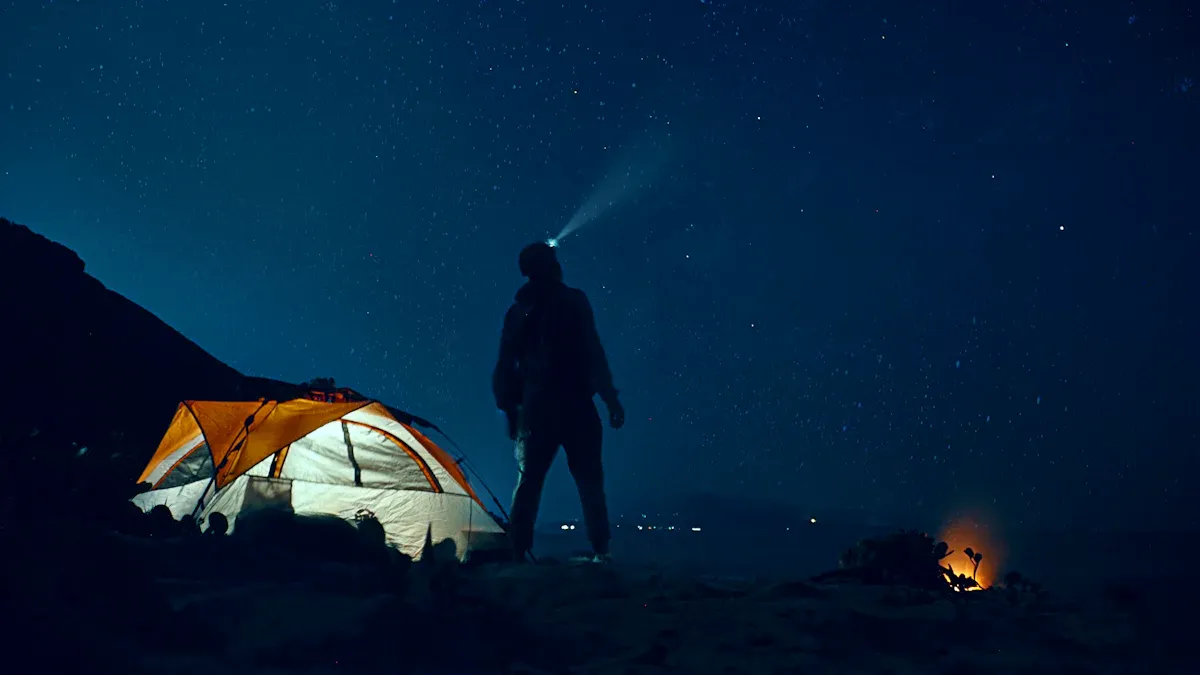
The Role of Light in the Backcountry
Night in the mountains arrives with a quiet authority. One moment the ridgelines glow with the last hints of sunset, and the next the forest settles into deep shadow. In that darkness, reliable lighting becomes more than a convenience; it becomes a vital tool that shapes how a campsite functions and how safely the trail can be navigated after sunset.
During many trips into high country terrain, I have realized that lighting influences everything from cooking dinner to organizing gear to simply enjoying the calm of a mountain evening. Without a dependable source of illumination, even simple tasks can turn frustrating or unsafe. Rocks hide in shadow, cooking surfaces disappear, and locating small items inside a pack becomes an exercise in patience.
Two tools dominate the conversation among serious campers: headlamps and lanterns. Both have loyal supporters and both serve valuable purposes. Understanding how each one performs in real-world camping scenarios reveals why many seasoned hikers rely on both rather than treating them as interchangeable.
Headlamps and the Freedom of Hands-Free Light
Headlamps offer one powerful advantage that becomes immediately noticeable the moment darkness falls: both hands remain free. This simple design feature changes how efficiently camp tasks can be completed. Cooking meals, setting up tents, tying knots, and filtering water all become easier when the light moves naturally with every glance and head movement.
On a steep trail or uneven campsite, this freedom also improves safety. Walking across loose rocks or roots in the dark demands balance and awareness, and holding a flashlight often feels clumsy. A headlamp directs light exactly where attention goes, illuminating the ground ahead without occupying the hands.
Another benefit appears during late-night navigation or early morning summit pushes. In these moments, headlamps become an extension of the hiker rather than just a piece of equipment. The beam follows the eyes, revealing switchbacks, trail markers, and terrain changes that might otherwise be missed.
Weight is another advantage. Most modern headlamps weigh only a few ounces and fit easily into a pocket or small pouch. For backpackers who carefully count every gram in their packs, that lightweight design makes a meaningful difference.
Lanterns and the Comfort of Shared Light
Lanterns provide a very different experience from headlamps. Instead of a narrow beam aimed in one direction, lanterns produce ambient light that fills an entire campsite. That soft, widespread glow changes the atmosphere immediately, turning a patch of wilderness into a functional living space.
Evenings in camp often involve more than one person, and lanterns excel in those moments. Cooking dinner, playing cards, or discussing the next day’s route becomes easier when light spreads evenly across a table or groundsheet. Instead of everyone wearing individual headlamps and blinding each other with shifting beams, a lantern provides steady illumination that everyone can share.
Lanterns also create a sense of calm that focused beams cannot replicate. A small lantern hanging from a tree branch or tent loop produces a warm pool of light that invites relaxation after a long day on the trail. The campsite feels more organized and welcoming when gear, cooking equipment, and food supplies remain visible without constant adjustments to a headlamp beam.
However, lanterns are usually bulkier than headlamps and require deliberate placement. Their strength lies in lighting a fixed area rather than following movement.
Brightness, Beam Patterns, and Real-World Performance
Brightness levels are often measured in lumens, but numbers alone rarely tell the full story. Headlamps typically feature focused beams designed to project light forward along a trail. This concentrated illumination allows hikers to see further ahead, which becomes especially valuable during night hikes or early morning departures.
Many headlamps include adjustable brightness settings that allow campers to conserve battery life or increase visibility when needed. A low setting might provide enough light for reading a map inside a tent, while a high setting can illuminate distant trail features during night travel.
Lanterns distribute light in a wide radius rather than focusing it forward. That wide spread means they rarely project as far as headlamps, but they illuminate larger areas at once. Instead of lighting a single path, lanterns brighten entire campsites, revealing multiple objects simultaneously.
This difference becomes clear during dinner preparation. A headlamp illuminates exactly where the wearer looks, which works well for detailed tasks. A lantern, on the other hand, lights the entire cooking space so everyone can see ingredients, cookware, and utensils without shifting beams constantly.
Both lighting styles serve important purposes, and the real value appears when they complement each other rather than compete.
Battery Life and Power Efficiency in the Wild
Power management becomes critical during extended trips where recharging opportunities are limited. Headlamps generally consume less power than lanterns because they illuminate smaller areas with focused beams. Many models now feature energy-efficient LEDs that allow them to run for many hours on modest battery capacity.
Rechargeable headlamps have become increasingly common among backpackers. Paired with small power banks or solar panels, they can last through multi-day trips without requiring disposable batteries. Some hikers still prefer traditional battery models for remote expeditions because spare batteries provide predictable backup.
Lanterns typically require more energy because they produce broader illumination. Larger lanterns designed for group campsites may run on heavier battery packs or multiple cells. While this increases brightness and runtime, it also adds weight and complexity to a backpacking setup.
Compact backpacking lanterns have improved significantly in recent years. Many now use rechargeable lithium batteries and efficient LEDs, allowing them to operate for extended periods without draining power quickly. Even so, lanterns usually demand more careful power planning than headlamps.
Weight, Pack Space, and Gear Priorities
Every item inside a backpack competes for space and weight allowance. Serious campers often analyze each piece of gear with careful attention, especially during long-distance treks or alpine climbs where every ounce matters.
Headlamps excel in this category. Their compact design and minimal weight allow them to slip into small compartments without affecting overall pack balance. Many hikers treat them as essential safety gear rather than optional equipment because they enable movement and navigation after dark.
Lanterns require more consideration. Even lightweight backpacking lanterns occupy more space than headlamps and often include hanging hooks or diffusers that add bulk. For minimalist hikers, this extra space may not always feel justified.
However, the comfort lanterns provide can outweigh their size for many campers. A small lantern can transform evenings at camp, especially during longer trips where relaxation and social interaction become valuable parts of the experience. In those moments, the extra space in the pack feels worthwhile.
Versatility Across Different Camping Styles
Lighting needs vary widely depending on the style of camping. Solo backpackers moving quickly through rugged terrain often prioritize lightweight gear and efficiency. For them, a headlamp usually becomes the primary lighting tool because it supports mobility and hands-free tasks.
Car campers and basecamp adventurers often lean more heavily on lanterns. When vehicles carry the bulk of equipment, weight and space concerns fade into the background. Lanterns can illuminate large campsites, cooking stations, and gathering areas with ease.
Group expeditions often benefit from both tools. Individual hikers rely on headlamps for personal tasks and nighttime movement, while lanterns provide shared light for communal activities. This combination allows each tool to perform its strengths without compromise.
Weather conditions also influence lighting preferences. Wind, rain, and cold temperatures can affect battery performance and visibility. Headlamps tend to remain reliable because they stay close to the body and move naturally with the user, while lanterns may require sheltered placement to remain effective.
Night Hiking and Trail Navigation
Traveling through mountainous terrain after dark presents challenges that demand reliable lighting. Trails twist through forests, climb rocky slopes, and sometimes disappear entirely beneath loose soil or fallen leaves. A dependable headlamp becomes a critical safety tool in these conditions.
Headlamps provide directional light that reaches further down the trail than lanterns can manage. This forward beam allows hikers to identify obstacles, track trail markers, and adjust footing on uneven surfaces. Even experienced hikers rely heavily on headlamps during night travel because terrain changes become difficult to see without focused light.
Lanterns rarely serve well for trail navigation. Their broad glow spreads outward but does not project far enough to illuminate distant obstacles or turns in the path. Carrying a lantern while hiking also occupies one hand and creates awkward shadows that shift unpredictably.
For this reason, lanterns generally remain in camp while headlamps accompany hikers on nighttime excursions. The difference highlights how each lighting tool fills a distinct role in the backcountry.
Atmosphere and Camp Life After Sunset
Light shapes the mood of a campsite more than many people expect. Harsh, directional beams can make evenings feel mechanical and task-oriented, while softer ambient light encourages relaxation and conversation. Lanterns excel at creating that welcoming environment.
After a long day of climbing ridges or crossing valleys, sitting around a softly lit campsite feels rewarding. The lantern’s glow spreads across cooking gear, maps, and mugs of hot drinks, creating a small island of warmth within the surrounding darkness.
Headlamps still play a role during these moments, especially for individual tasks like organizing backpacks or preparing sleeping gear. However, constant headlamp beams sweeping across faces and equipment can become distracting during group gatherings.
Lanterns smooth out that experience by providing steady light that everyone can share. The campsite feels more cohesive, and evening routines unfold more naturally.
Why Many Experienced Campers Carry Both
Debates about gear often search for a single best option, but lighting in the mountains rarely fits that simple pattern. Headlamps and lanterns solve different problems, and their combined strengths create a far more adaptable system than either tool alone.
A headlamp handles movement, detailed work, and navigation with ease. It provides immediate light wherever attention turns and remains light enough to carry on any adventure. Its reliability makes it one of the most trusted pieces of gear in a camper’s kit.
A lantern contributes comfort, visibility, and shared illumination at camp. It transforms a dark clearing into a functional living area and encourages the slower rhythms that define memorable nights outdoors.
Serious campers often recognize that balance. A lightweight headlamp rides in a pocket or around the neck, ready for quick use, while a compact lantern waits inside the pack for evening camp life. Together they provide flexibility that adapts to changing conditions, tasks, and environments.
Nightfall in the mountains will always bring deep shadows and quiet landscapes. Reliable lighting does not erase that darkness, but it allows campers to move confidently through it and enjoy the hours after sunset. Headlamps and lanterns each illuminate a different part of that experience, and the best trips often make room for both.
